Monday - Friday 09:00am-6:00pm
·

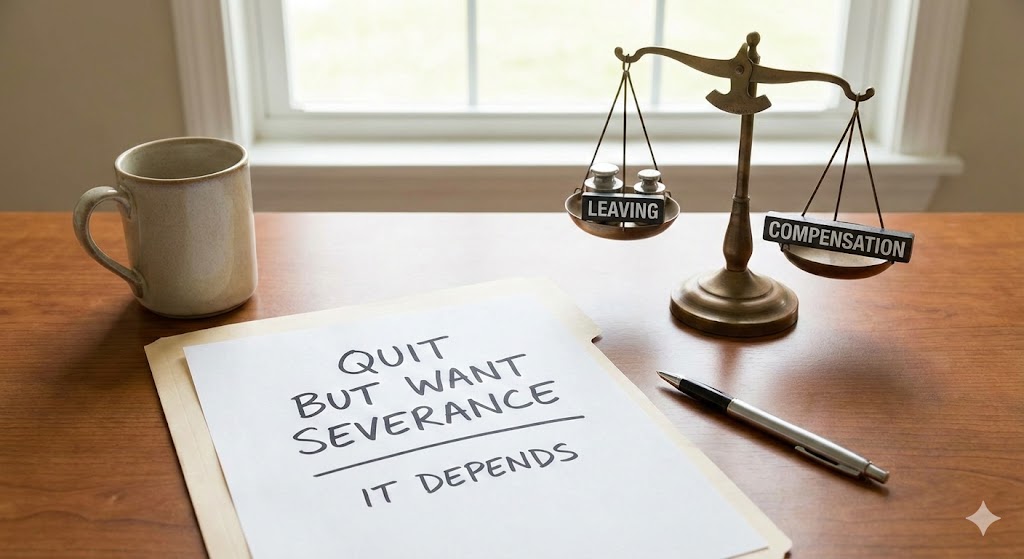
Do You Get a Severance Package If You Quit or Resign?

In most cases, no.
If you voluntarily resign, you are typically not entitled to severance pay. Severance is usually triggered when the employer ends the employment relationship, not when the employee chooses to leave.

That said, there are important exceptions.

Constructive Dismissal: When a “Resignation” Isn’t Really a Quit

If your employer makes a major unilateral change to a fundamental term of your employment, the law may treat that change as a termination, even if you technically resign afterward. This is known as constructive dismissal.

Common examples that may amount to constructive dismissal include:
• a significant pay cut
• a demotion or removal of core duties
• a major change to hours or schedule
• a toxic or harassing work environment
• forced relocation
• you have been laid off

Whether any of these changes amount to constructive dismissal depends on context. Each case must be assessed individually.

How Courts Look at “Major” Changes (Real-World Examples)

Not every change qualifies.
• A reduction from $75,000 to $72,500 per year may not be enough.
• A reduction from $75,000 to $55,000 per year is far more likely to constitute constructive dismissal.

Similarly:
• An additional 5–10 minutes of commuting time may not qualify.
• An added 45 minutes each way, five days per week, due to forced relocation is much more likely to meet the legal test.

The law applies a reasonableness analysis, not a checklist.

Why Legal Advice Matters Before You Quit

A constructive dismissal claim lives or dies on timing, context, and strategy.

In many situations, the employee’s goal is not to quit, but to block or reverse the change. Quitting too early can severely weaken your position.

Employees often miss key factors that an employment lawyer would immediately assess, including:
• whether your employment contract limits you to ESA minimums
• your length of service and financial leverage
• whether continuing to work while objecting preserves your rights
• how mitigation will affect your damages

A Common (and Costly) Mistake

For example, if you have less than three years of service and a contract that limits severance to ESA minimums, quitting due to relocation may result in:

• your employer accepting the resignation
• conceding constructive dismissal
• but owing only two weeks’ termination pay

In that scenario, many employees would have been financially better off continuing to work while searching for new employment.

Retirement and Negotiated Exits

Some departures look voluntary on paper but are negotiated in reality, including:
• early retirement packages
• role elimination offers
• voluntary severance programs

In these situations, severance is often available—and sometimes substantial—despite the departure being labelled “voluntary.”

Before You Resign: Get Advice First

Resigning can seriously damage your severance position.

If your workplace has become unworkable, legal advice before resigning can help you:
• preserve leverage
• avoid waiving rights
• assess whether continuing to work is strategically better
• understand what you would actually be entitled to if constructive dismissal is established

Employees who try to navigate this alone often create high-risk constructive dismissal claims that weaken their ability to negotiate a proper severance package.

Related Resource

For a deeper explanation, see our detailed guide on Constructive Dismissal in Ontario.

Are you unsure about quitting and want to protect your legal rights?

Contact McMackin Law today at (647) 451-3232 or by filling in the form below!